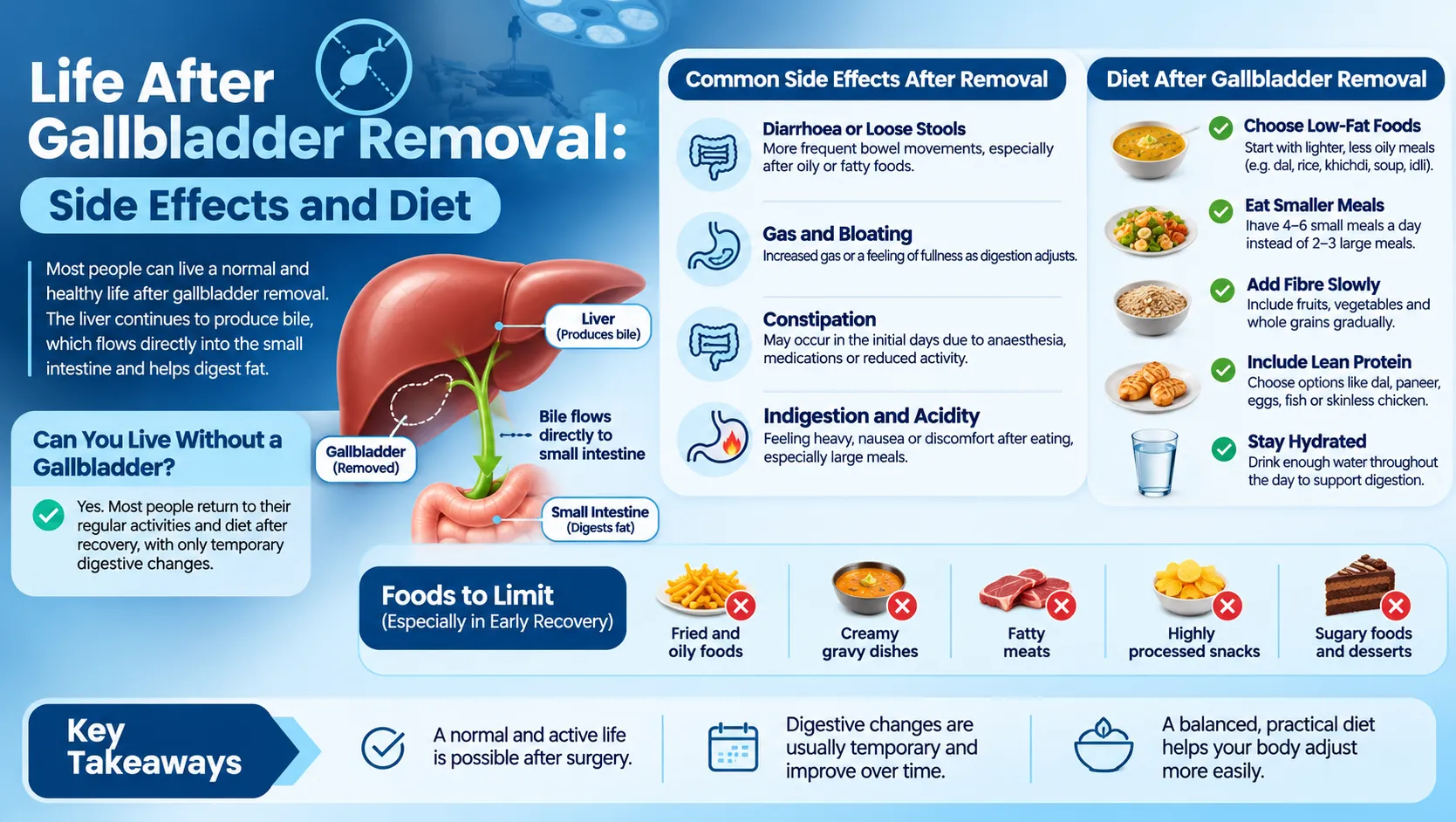
Life after gallbladder removal is usually normal for most people. The liver continues to produce bile, which helps digest fats, even after the gallbladder is removed. However, instead of being stored in the gallbladder, bile flows directly into the small intestine. This allows the body to continue digesting food without the gallbladder.
During the initial recovery period, some people may experience digestive changes such as loose stools, diarrhoea, gas, bloating or indigestion. These symptoms may improve as the body adjusts over time. Knowing which foods to eat, what dietary changes can help and which symptoms need medical attention is important for a smooth recovery.
Can You Live Without a Gallbladder?
Yes, it is possible to live a healthy and normal life without a gallbladder. The gallbladder is responsible for storing bile produced by the liver and releasing it into the small intestine when needed to help digest fats.
After gallbladder removal, the liver continues to produce bile. However, instead of being stored in the gallbladder, bile flows directly into the small intestine through the bile ducts. This allows the body to continue digesting food, including fats.
Some people may experience difficulty digesting fatty or oily meals during the initial recovery period. This happens because bile is no longer stored and released in larger amounts during meals.
Over time, most people adjust to this change and return to their regular diet. However, some may need to limit certain foods for a longer period if they continue to experience digestive discomfort. Following a balanced diet and noticing how your body responds to different foods can help manage these changes.
What Changes in Your Body After Gallbladder Removal?
The major difference is how the bile gets to the intestines. Previously, the bile was stored in the gallbladder and released in larger amounts when someone had eaten. After the surgery, the bile is constantly flowing into the intestines.
This may cause problems with defecation and fat intake. For instance, consumption of large and greasy meals may lead to diarrhea or flatulence in certain people.
However, the body adapts slowly, and it is not necessary to think that everyone experiences problems with digestion for the rest of their life.
Common Side Effects After Gallbladder Removal
Not everyone experiences side effects after surgery. Some people feel normal within a short time, while others notice changes in digestion during recovery.
1. Diarrhoea or Loose Stools
Diarrhoea is one of the common complications that follow gallbladder surgery. The bile flows more frequently into the intestines, and the bile acids entering the colon can cause loose bowel movements.
The issue is more likely to occur in response to the intake of oily or fatty foods. In many cases, it gets better in the coming weeks. In case of persistent diarrhoea for several weeks, it would be advisable to consult a physician. Medication can be required in order to counteract the bile acids' effects in the intestines.
2. Gas and Bloating
Others experience bloating or an increased amount of gas. This can occur as the digestive system gets used to the new bile production. Overeating and consuming fried and fatty foods can worsen the symptoms.
It is recommended to eat small meals and chew properly.
3. Constipation
Constipation may be observed within the first few days after the surgical procedure. Anaesthetic effects, some types of pain medications, and decreased physical activity affect the bowels.
Consuming a sufficient amount of water, walking according to the doctor's recommendations, and including fiber in the diet may assist. In case of constipation combined with intense stomach pain, vomiting, or inability to expel gas, consult your doctor.
4. Indigestion and Acidity
Others complain of feeling heavy, nausea, burping, or pain in their upper stomach after eating. Big meals can become more difficult to digest during the early stages of recovery.
Eat small amounts and take note of foods that cause digestive problems. If you continue to have problems with acidity or stomach pains, do not dismiss it as a side effect of your surgery.
Diet After Gallbladder Removal: What Should You Eat?
Food choices can make a difference during the first few weeks after surgery. The aim is to give the digestive system time to adjust without making meals too restrictive.
There is no single diet that every person must follow after gallbladder removal. However, a few changes can help reduce loose stools, gas and stomach discomfort.
1. Choose Low-Fat Foods in the Beginning
For the first week or so, avoid large amounts of oil and fat. Fried food, butter-heavy dishes, creamy gravies and fatty meat may cause loose stools or bloating.
Choose lighter options such as:
-
Plain dal with rice.
-
Soft khichdi.
-
Vegetable soup.
-
Idli.
-
Boiled or lightly cooked vegetables.
-
Skinless chicken or fish, if part of the regular diet.
-
Low-fat curd, if dairy does not cause discomfort.
You do not need to avoid all fat permanently. Once digestion improves, small amounts of healthy fats can be added back according to what your body tolerates.
2. Eat Smaller Meals Throughout the Day
It might be hard for someone to digest large meals soon after surgery. Instead of taking two to three big meals, take four to six smaller meals.
For instance, the patient can take a small meal in the morning, a light lunch, an evening snack, and a small dinner. Do not consume a lot of food in one go.
3. Add Fibre Slowly
Fibre helps keep bowel movements regular, but adding too much too quickly can cause gas and cramps.
Start with foods such as:
-
Oats.
-
Bananas.
-
Apples.
-
Barley.
-
Cooked vegetables.
-
Whole grains.
Increase the amount gradually rather than suddenly changing to a very high-fibre diet.
4. Include Protein in Daily Meals
Protein supports healing after surgery and helps the body recover. Include foods that are easy to digest, such as dal, moong dal, curd, eggs, fish or skinless chicken, depending on individual preference and tolerance.
5. Drink Enough Water
Water plays an important role in keeping you from becoming dehydrated. Try to drink fluids often during the day. If you have frequent diarrhoea, consult your doctor if an oral rehydration fluid would be appropriate.
Which Foods Should You Avoid After Gallbladder Removal?
There is no permanent list of foods that everyone must avoid. Still, some foods can cause problems during the early recovery period.
|
Food or drink |
Why it may cause discomfort |
|
Fried snacks like samosa and pakora |
High oil content may trigger loose stools |
|
Heavy gravies and creamy dishes |
Large amounts of fat can be difficult to digest |
|
Fatty meat |
May cause heaviness or bloating |
|
Butter and cream |
High fat content may upset digestion |
|
Very sweet foods |
May worsen diarrhoea in some people |
|
Strong tea and coffee |
Caffeine may increase bowel movements |
|
Milk and dairy products |
May cause loose stools in people who do not tolerate them well |
|
Alcohol |
May irritate the digestive system and should be avoided during recovery unless the doctor advises otherwise |
You do not have to give up every food on this list forever. Try foods in small amounts once recovery is going well. If a particular food repeatedly causes discomfort, reduce it and discuss the problem with your doctor.
How Long Does It Take to Adjust to Life Without a Gallbladder?
Many patients experience improvement in the next few days and can resume their normal routines during recovery. It usually takes several weeks for the digestive system to adjust. There may be some who would require more time to be able to consume the types of food that they previously ate before surgery.
Recovery time is not set at all. This will depend on the procedure done, individual health status, and possible complications.
It is important to heed the surgeon's recommendations regarding walking, lifting of heavy items, wound management, and going back to work during recovery. Pain relief does not necessarily mean being ready for rigorous physical tasks.
When Should You Contact a Doctor After Gallbladder Removal?
There may be some mild digestive issues that occur following surgery, but some other symptoms require immediate medical intervention. Contact your doctor if you experience any of the following symptoms:
-
Severe or worsening stomach pain.
-
Recurrent nausea or inability to retain food or liquids.
-
Fever or chills.
-
Yellow coloration in your skin and eyes.
-
Redness, swelling, pus, or worsening pain at the site of surgery.
-
Persistent diarrhea for more than a few weeks, which is severe and/or includes blood.
-
Unexpected weight loss or weakness.
These symptoms may indicate several different problems that require treatment, including an infection or issues with your bile ducts.
Conclusion
Most people can live a normal and healthy life after gallbladder removal because the liver continues to produce bile, which flows directly into the small intestine. Some patients may experience diarrhoea, loose stools, gas or bloating during the recovery period as the digestive system adjusts. These symptoms may improve over time with suitable dietary changes. A lifelong restrictive diet is not necessary for everyone, and most people can gradually return to a balanced, normal diet.
If you experience persistent digestive problems after gallbladder removal, do not ignore them. Consult Dr. Rajesh, an experienced General Surgeon in Gurgaon, with over 13 years of experience, for proper evaluation and medical guidance based on your condition.
Frequently Asked Questions (FAQs)
1. What should I eat after gallbladder removal?
After gallbladder removal, it is generally recommended to start with small, low-fat meals during the initial recovery period. Foods such as khichdi, dal, rice, vegetable soup, oats, bananas and lightly cooked vegetables may be easier to digest. Gradually reintroduce other foods as your digestion improves. You do not need to avoid all fats permanently, but limit fried and oily foods if they cause discomfort.
2. How can I prevent fatty liver after gallbladder removal?
Gallbladder removal does not automatically cause fatty liver. However, maintaining a healthy lifestyle can help reduce the risk of fatty liver disease. Eat a balanced diet, maintain a healthy body weight, exercise regularly and limit sugary drinks, highly processed foods and excess alcohol. If you have diabetes, high cholesterol or excess weight, discuss appropriate screening and prevention with your doctor.
3. How does life change after gallbladder removal?
Most people can return to a normal and healthy lifestyle after gallbladder removal. The liver continues to produce bile, but it flows directly into the small intestine instead of being stored in the gallbladder. Some people experience temporary digestive changes, such as loose stools, gas or bloating. Most gradually adjust and can return to a balanced, regular diet.
4. What is the best way to sleep after gallbladder surgery?
The best sleeping position after gallbladder surgery is the one that feels comfortable and does not put pressure on the surgical area. Some patients find sleeping on their back with their upper body slightly elevated more comfortable during the initial recovery period. Avoid positions that increase pain around the incisions, and follow your surgeon's specific instructions.
5. Do you need bed rest after gallbladder removal?
Complete bed rest is generally not required after uncomplicated laparoscopic gallbladder surgery. Gentle walking, as advised by your surgeon, can help support recovery and reduce the risk of blood clots. However, you should avoid heavy lifting, strenuous exercise and activities that strain the abdominal muscles until your doctor says they are safe.
6. Is it normal to gain weight after gallbladder removal?
Gallbladder removal itself does not usually cause weight gain. However, changes in eating habits, physical activity and lifestyle during recovery may affect body weight. Following a balanced diet, maintaining regular physical activity when medically cleared and monitoring your weight can help support long-term health. If you experience unexplained or sudden weight changes, consult your doctor.